· Pentora Ltd
AI Business Idea Generator: Find Your One-Person AI Business in 15 Minutes (Free Claude Skill)
The AI business idea generator skill for Claude (pd-ai-business-idea-generator) turns what you enjoy and what you’ve done into one concrete offer: what you sell, who you sell it to, and what you charge. It backs every answer with live market research and delivers a polished HTML report with a 7-day action plan. It’s free, built by Patrick Dang, and it’s one of the best-designed Claude skills I’ve used.
You don’t need business experience. The skill is written for “anyone starting a 1-person business”, with “no skills or experience required, since AI is the equalizer.” In practice, you:
- Answer four questions
- Pick one of 2–3 idea cards
- Wait a few minutes while Claude researches real competitors and prices
- Check a summary, then receive your report
Why a one-person AI business makes sense now
Solo businesses are growing fast, but most small businesses still haven’t put AI to work. Stripe reports that more than twice as many solopreneurs earned over $1M in 2025 as in 2023 (Stripe Economics). Meanwhile, only 25% of small businesses in one 2025 survey had built AI into daily operations, and many more were still exploring it (PayPal Newsroom).
Plenty of people want to use AI but don’t know what to use it for. This AI business idea generator answers that question for you.
Who built it: Patrick Dang’s approach to AI business ideas
Patrick Dang is a former Oracle sales rep who now teaches everyday people to build one-person AI businesses. His YouTube channel focuses on “helping every day regular people build profitable 1-person businesses + personal brands using AI” (YouTube), and he has trained over 100,000 students across 150 countries in sales and lead generation (Udemy).
The skill’s central idea: you don’t need to sell “AI services.” You sell something you believe in, and AI is the delivery advantage that lets you ship faster, cheaper and at a higher margin.
How the Ikigai framework shapes your business idea
The skill builds on the four-circle Ikigai diagram (love, good at, world needs, paid for), which blogger Marc Winn popularized in 2014. Winn himself notes that the Japanese concept “is not a career-planning tool” (The View Inside Me), so treat the diagram as a practical prompt, not ancient wisdom.

Coaching rules that refuse generic answers
The coaching rules are what make it work. The skill:
- Refuses generic niches like “AI consulting”, plus app or startup ideas
- Pushes back once on vague answers
- Reframes every past job as credibility — bartending counts, tutoring counts, gaming counts
To see it in action, watch Patrick’s walkthrough: I Helped a Stranger Build a 1-Person AI Business ($5,500/mo with Claude).
How the AI business idea generator works, stage by stage
Advertisement
Type “find my AI business idea” or /abig, and the skill runs five stages, asking questions in pairs so you wait once instead of five times.
1. Quick Ikigai (4 questions, 2 batches)
First: what you enjoy, and every job, side project or hobby from the last 5–10 years. Second: what problems people around you struggle with, what you’ve been paid for, your monthly income goal, and how comfortable you are with AI.
2. Idea cards (2–3 options)
Each card reads “[Service] for [specific person] struggling with [problem] → [outcome]”, with a “Why you” line and an AI-leverage rating. You pick one or remix it.
3. Live market research (10–20 searches)
Claude looks for:
- Demand signals and real prices
- 5 human competitors with working links (AI tools are never listed as competitors)
- 3–5 creators teaching the space
- The exact words buyers use
If demand looks weak, it tells you and steers you to a stronger angle.
4. The Offer Triangle: what, who and price
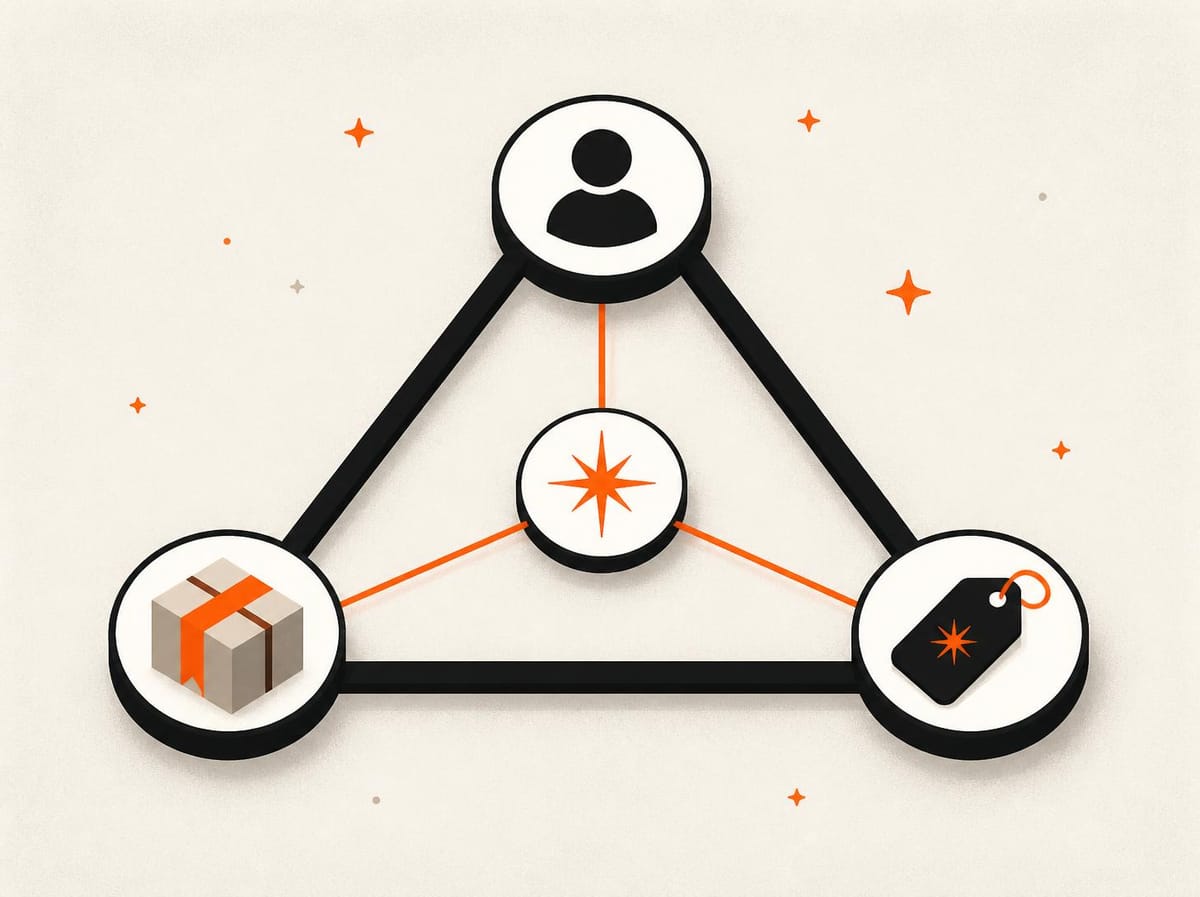
- WHAT: an “I help [X] achieve [Y] by [Z]” one-liner and an AI delivery stack comparing the traditional way with the AI way.
- WHO: one specific buyer, the channels to reach them, and a competitor table.
- PRICE: three tiers, with the recommended Core tier at 0.7–0.9× the traditional alternative, plus a guarantee and income math.
You review all of this in chat before anything is generated.
5. The HTML report and 7-day action plan
You get a self-contained black, white and orange page with an Offer Triangle diagram, every table, and a 7-day action plan. Days 1–3 cover setting up your stack and your one-liner. Days 4–7 cover outreach, aiming to book three calls.
Example: from bartender to review-management service
Illustrative, hypothetical example (not a real run or researched figures): A former bartender who enjoys writing notices that local restaurants struggle with bad online reviews. One idea card might read “Review-response and Google profile management for independent restaurants struggling with bad reviews → higher ratings”, with hospitality experience as the “why you.” Research would find real agency and freelancer prices, the Core tier would sit just below agency rates, and the income math would show how many clients reach the goal.
From offer to prospect list with /pd-listbuilder
Advertisement
Once you have an offer, Patrick’s companion skill /pd-listbuilder finds the people to sell it to. Its intake opens with “What do you sell?” and “Who’s your ideal client?”, so the WHAT and WHO from your Offer Triangle drop straight in. Patrick’s Founder X landing page offers the two skills together (Founder X).
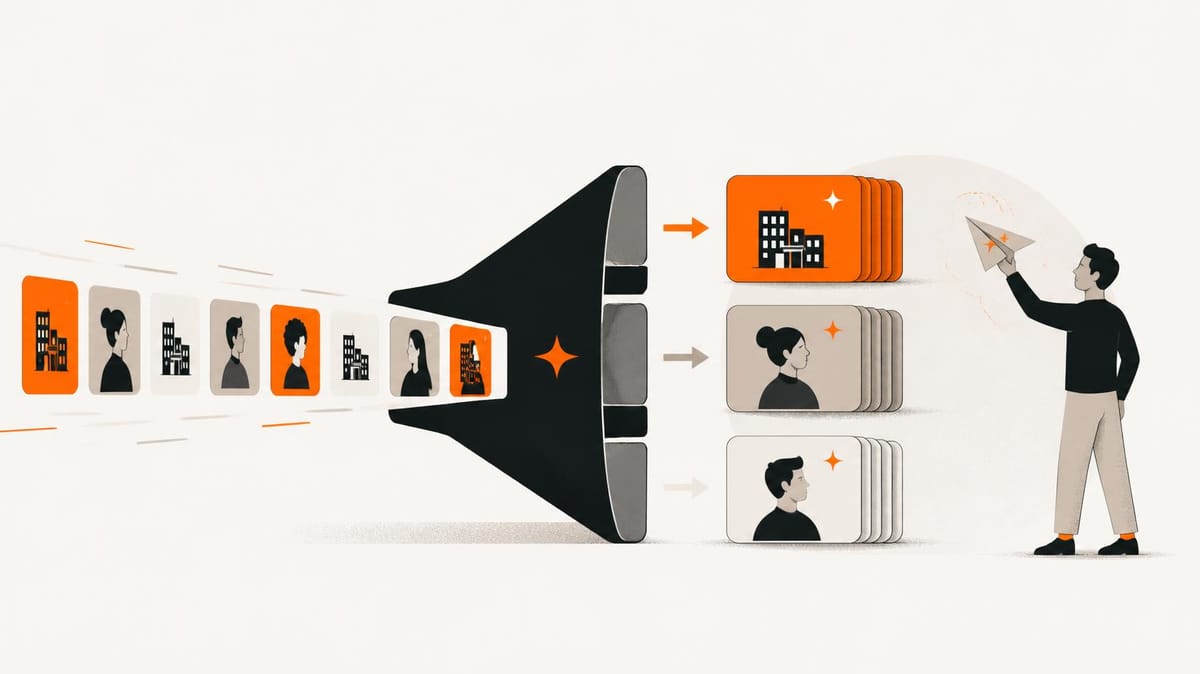
It works in four steps:
- Define your ideal client profile (ICP).
- Choose custom scoring triggers — recent funding, LinkedIn activity, employee count or tech stack — and approve the point system.
- Research companies and decision-makers on the web. A trigger only earns points if Claude can verify it.
- Export a colour-coded Excel workbook (HOT, WARM or COLD, plus Summary and Scoring Guide sheets) and a CSV with one decision-maker per row, ready for cold-email tools.
By default it builds a list of 20–30 companies. It never invents data: anything it can’t find is marked “Unknown”, and emails are included only when publicly findable, so verify addresses before you send.
Frequently asked questions
What is the AI business idea generator skill?
It’s a free Claude skill by Patrick Dang (pd-ai-business-idea-generator) that uses a quick Ikigai interview, live web research and the Offer Triangle to produce one concrete business offer — what to sell, who to sell it to and what to charge — in an HTML report.
Do I need business experience or technical skills to use it?
No. The skill is designed for anyone starting a one-person business. It treats any past job, hobby or side project as credibility for your offer.
How long does it take to get a business idea?
Around 10–15 minutes. You answer four questions in two batches, pick an idea card, and wait a few minutes while Claude runs 10–20 research searches.
What is the Offer Triangle?
The Offer Triangle is the skill’s framework for a complete offer: WHAT you sell (and how AI delivers it), WHO you sell it to, and the PRICE you charge, set as three tiers anchored below the traditional alternative.
Does it suggest selling AI services?
No. It deliberately rejects generic niches like “AI consulting.” You sell a service you believe in, and AI is how you deliver it faster and at a higher margin.
How do I install a Claude skill?
Go to Settings > Capabilities in Claude, click “Upload skill” in the Skills section, add the ZIP file and switch it on (Claude Help Center). New to skills? How Claude Skills work explains what happens when one loads. Enable web search, because the research stages depend on it.
What’s the difference between pd-ai-business-idea-generator and pd-listbuilder?
The idea generator decides what to sell and to whom. The listbuilder then finds real companies and decision-makers matching that buyer and scores them into a prospect list for outreach.
Get both skills and run them today
Together, these two skills cover the hardest early steps of a one-person AI business: deciding what to sell, then finding your first buyers. Both were created by Patrick Dang, and all credit goes to him. Get them from his page at Founder X, and watch his video for the full walkthrough.