· Pentora Ltd
LLM Visibility: How I Help DTC Brands Get Found by AI
By Pentora
LLM visibility is how often AI assistants such as ChatGPT, Claude, Perplexity, Gemini and Google AI Overviews name your brand when a shopper asks them for a recommendation. I help DTC brands improve it with a five-step process: pin down the buyer questions and competitors, audit how each engine answers those questions today, turn the gaps into a prioritized roadmap, build the content AI engines can lift, and track visibility monthly as a percentage of repeated runs rather than a “ranking”. I’ve packaged the whole process as a free Claude skill you can run yourself.
Why bother? 39% of US consumers in Adobe’s 2026 survey said they use AI for online shopping (Adobe), and AI-referred visitors to US retail sites converted 54% better than other traffic in May 2026 (Digital Commerce 360). If you’ve ever asked “why doesn’t ChatGPT recommend my brand?”, this is how I answer it. I won’t promise “#1 in ChatGPT”. Nobody honestly can, and I’ll show you why.
Why LLM visibility matters for DTC brands in 2026
AI assistants are now a mainstream place to research products, and the shoppers who click through from them arrive ready to buy. Being left out means being absent when a buyer builds a shortlist.
- ChatGPT has more than 900 million weekly active users (Search Engine Land), and 30–45% of US consumers use generative AI for product research and comparison (Bain).
- AI Overviews appeared on 95.4% of comparison queries, but only 5% of transactional ones (Seer Interactive). That’s where shoppers pick a brand.
- Brands cited inside an AI Overview earned about 2.07% CTR, against 0.94% for brands that weren’t cited (Seer Interactive).
Keep it in proportion: AI is still less than 1% of total traffic for retailers (Bain). It’s a high-intent channel, not yet a revenue line.
The buying model is still settling. OpenAI’s Instant Checkout was retired in March 2026 after Walmart saw in-chat purchases convert three times lower than click-throughs to its own site (Modern Retail). For now it’s “discover in AI, buy on your site”, so being recommended matters more than in-chat checkout.
Why I measure visibility percentage, not “rank in ChatGPT”
AI answers change almost every time you ask, so there’s no stable ranking to track. What I measure is how often a brand appears across many runs of the same prompts, reported per engine.
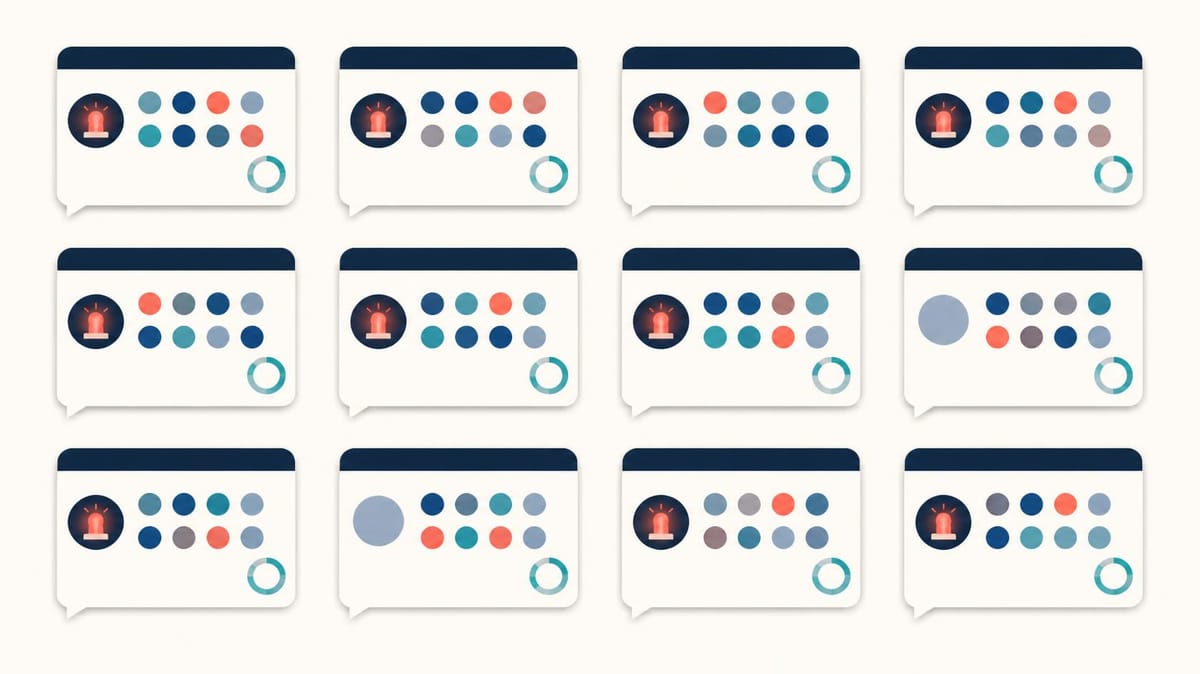
In SparkToro’s study, 600 volunteers ran 12 product-recommendation prompts 2,961 times across ChatGPT, Claude and Google AI Overviews. There was less than a 1 in 100 chance of getting the same list of brands twice, and about 1 in 1,000 of getting the same order (SparkToro). Yet top brands in narrow categories still appeared in 55–77% of runs. SparkToro’s conclusion: visibility % across many runs is a reasonable metric, and tools that claim ranking positions are “baloney”.
Engines also disagree: Google’s AI Mode and AI Overviews cite the same URLs only 13% of the time (Search Engine Journal). So “I asked ChatGPT and we weren’t there” is an anecdote, not a measurement.
My LLM visibility process, step by step
Advertisement
My process has five steps, each feeding the next: orientation, audit, roadmap, content and tracking. It’s the workflow in my free dtc-llm-visibility skill. Download the skill here.
| Step | What I do | What you get |
|---|---|---|
| 0. Orientation | Brand, category, buyer questions, 2–4 named competitors | A shared brief |
| 1. Audit | Live-query test, site audit, synthesis | An audit report tied to real answers |
| 2. Roadmap | Rank fixes by leverage | This week / this quarter / ongoing plan |
| 3. Content | FAQs, comparison pages, schema | Drafts specific to your products |
| 4. Tracking | Generate a prompt test suite | A monthly tracker CSV |
Step 0: Name the buyer questions and 2–4 real competitors
Before testing anything, I collect the brand name, category, website, target buyer, the questions that buyer actually asks, and 2–4 real competitors. Named competitors matter because AI search optimization is comparative: when a model answers “what’s the best X for Y,” it is usually choosing between brands. I also ask what’s been tried already (SEO, PR, Reddit) and never guess at a company’s positioning.
Step 1: Audit how AI engines answer your buyers today
The audit shows where a brand appears in AI answers today, where it doesn’t, and why, with every finding tied to a specific query or page. It has three parts.
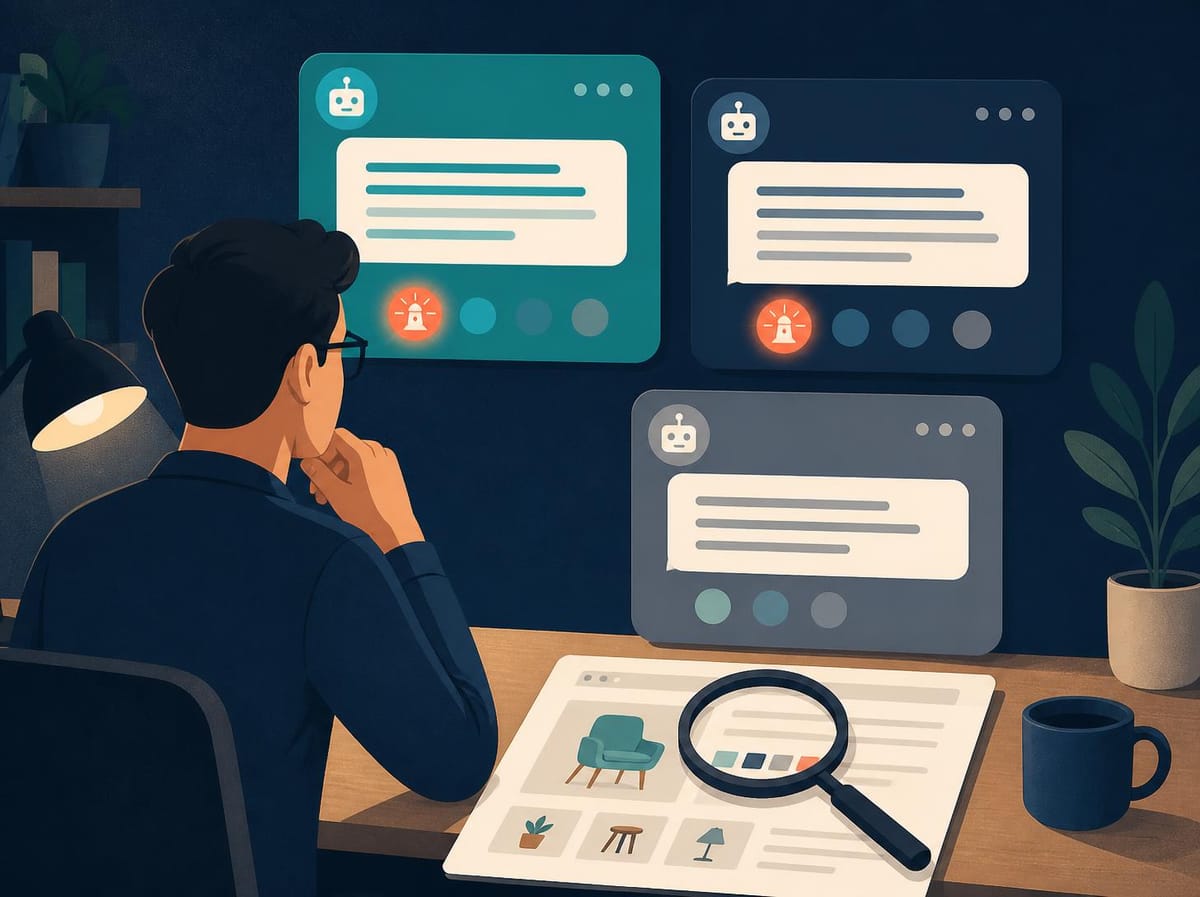
- Live-query test. I write 8–12 realistic buyer-intent prompts: broad recommendations (“best X for Y”), comparisons (“X vs Y vs Z”) and specific needs (“X for [use case]”), never brand-name searches. For each one I record whether the brand appears, how it’s framed, which competitors show up and what sources the answer leans on. The prompts also go into a copy-paste block for ChatGPT, Perplexity and Gemini, because a claim tested on one model is weak evidence.
- Site audit. I review the homepage, 2–3 product pages and any FAQ or about pages against a checklist with five areas: content structure, comparison and decision content, structured data and technical health, third-party proof (reviews, press, Reddit and forum presence, original data) and authorship signals.
- Synthesis. “You’re missing FAQ schema” is not a finding. “Asked for the best recovery drink for athletes, the model named two competitors and not you, and your product pages answer none of the comparison questions” is.
Hypothetical example (not a real customer): an electrolyte powder brand has strong on-site reviews but no comparison content and no presence in the Reddit threads where its category is discussed. The audit shows competitors named in comparison prompts while it’s missing, so the roadmap leads with comparison pages and genuine community participation, not schema.
Every report is dated “as tested on [date]”, because it’s a snapshot.
Step 2: Turn the gaps into a roadmap: this week, this quarter, ongoing
I rank fixes by leverage (the biggest, most repeated gap for the least effort) and group them into three horizons, because small DTC teams need to know what to do on Monday.
- This week: quick fixes, such as unblocking pages in robots.txt or making a product page answer “what is it, who’s it for” in the first 150–200 words.
- This quarter: content builds, comparison pages and a schema rollout.
- Ongoing: PR, Reddit and community presence, review generation and the tracking cadence.
Step 3: Build content that AI engines can lift
The highest-leverage assets are, in order: FAQs that answer the exact buyer questions from the audit, honest comparison pages against named competitors, and Product and FAQPage schema on pages that already have good content.
- FAQs: at least 5–8 questions per key page, phrased the way buyers type them, each answered in 50–150 self-contained words.
- Comparison pages: name real alternatives and admit where a competitor wins. A one-sided page reads as marketing, and buyers and models discount it.
- Schema: Product (price, availability, rating) and FAQPage markup. I never invent specs, certifications, ratings or review counts. If I don’t have the real number, the field stays a clearly marked placeholder.
Step 4: Track brand mentions across ChatGPT, Claude, Perplexity and Gemini every month
Visibility drifts, so I leave every customer with a reusable prompt test suite that they rerun monthly. The skill’s build_tracker.py script takes your brand, category, audience and competitors and generates a CSV from 10 buyer-intent templates (“What’s the best {category} for {audience}?”, “{brand} vs {competitor_1} vs {competitor_2}”, “What {category} do people recommend on Reddit?” and so on) across four engines: 40 rows, with columns for date, prompt, engine, brand mentioned (y/n), framing, competitors mentioned, source cited and notes.
To be clear: it’s a test suite, not a live scraper. It doesn’t query any engine or update itself; you run the prompts and log what you see. SparkToro suggests 60–100 runs per prompt for a solid visibility % (SparkToro), more than a small team will do by hand, so run each prompt a few times per engine and read changes against that noise. If you buy a paid tracker, ask how many times it samples each prompt. For clicks, GA4’s built-in “AI Assistant” channel helps (Google Analytics Help), but app traffic still lands in Direct and AI Overviews clicks stay in organic (Orbit Media).
Download the skill here to generate your own tracker.
What actually drives AI citations, and what’s just hygiene?
The strongest signals are off-site: brand mentions, earned media and community discussion. Technical “AI-specific” tactics like schema and llms.txt have weak or no evidence of lifting citations. Most of this research is correlational, and I say so to customers.

| Tactic | What the evidence says | How I treat it |
|---|---|---|
| Brand mentions, YouTube, press | In Ahrefs’ 75,000-brand study, YouTube mentions (~0.737) and branded web mentions (0.656–0.709) correlated with AI mentions far more than backlinks, but Ahrefs says “correlation isn’t causation” (Ahrefs) | Priority, with bigger brands as a confounder |
| Earned media | 84% of AI citations were earned media and 0.3% paid or advertorial (Muck Rack) | Invest in PR and reviews, not advertorials |
| Statistics, quotes, citations on-page | The GEO paper’s controlled test found boosts of up to 40%, while keyword stuffing hurt (arXiv) | Worth doing, though tested on older engines |
| Schema markup | Google: “no special schema.org structured data” is needed (Google Search Central). Ahrefs’ controlled study found no significant citation lift in ChatGPT or AI Mode (Ahrefs) | Hygiene for rich results and product data, not a lever |
| llms.txt | No measurable link to citations across ~300,000 domains (Search Engine Journal) | Optional, not a priority |
The skill still recommends schema because it’s cheap and keeps product data clean. I just won’t sell it as the reason ChatGPT will start recommending you.
Get the free DTC LLM visibility skill (a free AI visibility audit you run yourself)
Advertisement
The whole process is a free Claude skill you run yourself, with no sign-up form or sales call. Install it in Claude or Claude Code, ask “why doesn’t ChatGPT recommend us?”, and it walks you through Steps 0 to 4.
What’s in the download:
- SKILL.md: the five-step workflow and its rules
- Audit checklist: the Step 1 site review
- Tactics playbook: with Product and FAQPage schema templates
- Audit report template: including the roadmap horizons
- build_tracker.py: the prompt tracker generator
Download the skill here. It’s free on the Skill-Store.
Frequently asked questions
Can I pay to get my brand into ChatGPT’s answers?
Not into the organic answer. In Muck Rack’s analysis of 25M+ links cited by ChatGPT, Claude and Gemini, paid or advertorial content made up just 0.3% of citations (Muck Rack). The reliable route is earned coverage, reviews and content that answers buyer questions.
How long does it take to show up in AI answers?
There’s no reliable published timeline. Cited sources churn heavily: roughly 40–60% of cited domains change month to month in Profound’s data (Profound). Judge progress over several monthly tracking cycles, not one check.
Is GEO just SEO rebranded?
Partly. CXL argues most agencies are “repackaging SEO fundamentals with new terminology” (CXL), and Google says AI Overviews need no special optimization. What differs is the emphasis: comparison content, off-site mentions and measuring visibility % instead of rank.
Do I need schema or an llms.txt file?
Neither is required. Google says you don’t need special markup or AI text files, an Ahrefs controlled study found no significant citation lift from schema, and SE Ranking found no measurable effect from llms.txt. Add Product and FAQPage schema as hygiene, and put your effort elsewhere first.
Does Reddit really matter for DTC brands?
It matters, but it’s fragile. Reddit is Perplexity’s top cited domain at 6.6% of citations (Profound), yet ChatGPT’s Reddit citation frequency fell from about 60% to about 10% in a few weeks in 2025 (Semrush). Take part honestly where buyers already talk; don’t astroturf.
How do I get my products into ChatGPT or Google AI shopping?
ChatGPT retired Instant Checkout in March 2026, and checkout now happens on merchants’ own sites or in merchant apps (Modern Retail). Google is the exception: its Universal Commerce Protocol supports checkout across AI Mode and Gemini, and Merchant Center is adding “conversational attributes” for product descriptions (Google). Keep that feed accurate.
Where to start this week
Pick 8–12 questions your buyers actually ask, run them in ChatGPT, Perplexity and Gemini a few times each, and write down who gets named instead of you. That list tells you whether your first job is content, comparison pages or earning mentions elsewhere. To do it properly, grab the free skill — download it here.